Course Outline — Building Characters
StoryLife™ Learning · Building Characters
Chapter 1 | Section 1

A story can contain extraordinary inventions and still feel strangely empty. A starship can be exquisitely designed. A magic system can obey its rules without a single flaw. An empire can stretch back a thousand years, dense with wars, dynasties, and fallen gods. And still, none of it guarantees a story anyone will remember.
When characters feel flat—when they exist only to move the plot from one set piece to the next—the most dazzling world begins to feel weightless. Readers may admire the architecture. They rarely stay for it.
Readers stay for people. They lean in when someone wants something badly enough to risk losing it, fears something deeply enough to avoid it, or makes a choice that will cost them.
Character is what gives a story gravity. It turns ideas into experience, dialogue into tension, and events into consequence.
Speculative fiction is especially vulnerable to forgetting this principle. The genre invites us to lead with invention: the breakthrough technology, the strangest species, the intricately built cosmology. But the stories that endure—whether epic fantasy or hard science fiction—are carried by their characters: the exile who refuses to bend, the pilot who cannot outrun her past, the apprentice who discovers the price of power.
Worldbuilding matters most when it presses against desire and forces a choice.
So how do you create someone readers cannot forget? Why do some characters linger for decades after the last page—and others dissolve before the book is closed? This book explores that difference. It is about building characters who do not merely inhabit a world, but generate story through what they want, what they fear, and what they are willing to sacrifice.
Before we examine backstory, personality traits, or character arcs, we begin with the foundation: why character is the engine of speculative fiction—and how to ensure your cast never becomes mannequins posed against beautiful scenery.

Science fiction and fantasy ask readers to accept unfamiliar rules—faster-than-light travel, telepathic bloodlines, living cities, sentient oceans. Why do readers believe any of it?
These elements are not persuasive because they are merely explained. They become believable because the characters treat them as real. When someone inside the story behaves as though these things shape their daily life. Fearing them, depending on them, suffering their consequences, the reader accepts them as real.
Readers rarely believe the impossible because it is explained clearly. They can follow anything if someone inside the story treats it as a lived reality with consequences. The impossible ceases to be a theory when it becomes a character's existence. Readers believe what characters must live with...
Character is the reader's point of entry into a world that would otherwise feel abstract or implausible. Readers cannot experience faster-than-light travel, telepathic dynasties, or living planets. But they understand fear, duty, loyalty, grief, and hope. When a character encounters the impossible with recognizable human responses, the reader follows that emotional logic into the unfamiliar. The world may be extraordinary, but the character provides the door through which the reader steps inside.
That is the first function of character in speculative fiction: credibility. The impossible becomes believable only after it passes through a character's experience. If the character feels real, the world will feel real as well.
A believable character has consistent values, clear motives, and reactions proportionate to the pressure they face. The more extraordinary your setting, the more you need characters whose internal logic is clear. If dragons exist, people will have policies, prayers, superstitions, economies, and scars shaped by them—and your character should carry those imprints in their decisions.
Stories also contain moments when the unfamiliar rules must surface naturally inside the narrative. Too many authors present the world directly to the reader instead of letting the reader encounter it through a character. Information alone rarely persuades. Consequence does.
Consider two ways a science fiction author introduces an authoritarian interstellar regime. They can insert an elegant paragraph of history, or follow a customs officer who has memorized the empire's regulations because one mistake would cost her sibling's citizenship—so she checks a traveler's documents twice before stamping the entry permit.
The interstellar regime might be delivered through written documents, conversations between characters, or descriptive passages. These methods transfer information quickly, but information alone rarely lingers.
The second approach does double duty by following a customs officer: it reveals the regime and simultaneously shows what it costs. The reader learns through stakes, not lecture. Readers believe what characters risk.
In fantasy, the same principle applies. A sacred grove protected by ancient spirits is not compelling on description alone. It becomes compelling when your protagonist needs its protection but is sworn never to ask the spirits for help—when stepping into that grove would save a friend and betray a vow, and the character hesitates at the grove's boundary, knowing that crossing it will break the oath.
The supernatural becomes real when the character's dilemma is experienced and palpable to the reader. When the impossible passes through a character's choices, it stops being worldbuilding and becomes story.

Looking from a certain angle, worldbuilding and plot appear connected, but they are not the same thing. Worldbuilding provides context, constraints, and possibilities. Plot is what happens in the story. On their own, both remain inert until stakes are defined.
Stakes explain why events matter. Character stakes connect invented systems to the narrative of the moment because they convert world facts into personal consequence. The world establishes conditions. Stakes determine why those conditions hurt.
In science fiction, technology is not inherently dramatic. A memory-editing procedure becomes dramatic when a character wants it to escape grief but suspects it will erase the only evidence of a crime. A colony's oxygen shortage becomes dramatic when the protagonist is the engineer who caused it, and the only solution requires confessing to a mistake that would lead to exile.
The world provides the lever. The character provides the weight.
In fantasy, a prophecy is not inherently dramatic. It becomes dramatic when the chosen one resents being drafted into destiny because fulfilling it would require abandoning the family she spent years protecting. A cursed sword is not inherently dramatic until the warrior realizes it rewards victory by eroding empathy—and winning the war may leave him unable to recognize the peace he claimed to want.
Magic systems, alien economies, technological hierarchies—none of these produce drama on their own. They become dramatic the moment a character wants something the system makes difficult or impossible, and must decide how far they are willing to go.
Worldbuilding creates the rules of the world. Character decides which rules cost the most to follow—and which are worth breaking.
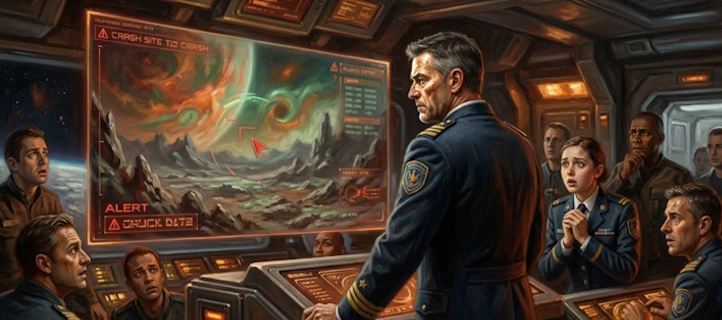
Speculative settings intensify pressure because the systems surrounding the character magnify the consequences. A starship captain deciding whether to abandon a damaged colony ship is not only making a tactical decision but a moral one that will define who they are to the thousands of lives aboard. A mage deciding whether to break a sacred law to stop a war must live with the knowledge that the peace they create may destroy the traditions they once defended.
The setting provides extraordinary circumstances, but the conflict remains human. Readers do not remember the technical specifications of the starship or the exact mechanics of the spell. They remember the moment the captain chose who would live, or the moment the mage decided what kind of person they were willing to become.
This is why character decisions sit at the center of memorable stories. Worldbuilding creates the environment. Stakes create pressure. Choices reveal the person inside that pressure.
When readers say they love a character, they are rarely referring to appearance, profession, or even personality alone. They are responding to the pattern of decisions that character makes when the cost is real. Readers remember who someone chooses to be when it matters.
Stories move forward when pressure escalates. Each decision narrows the character's options and raises the price of the next choice. A character who never faces real cost never becomes real to the reader. Give your characters decisions that hurt—and let them choose anyway.
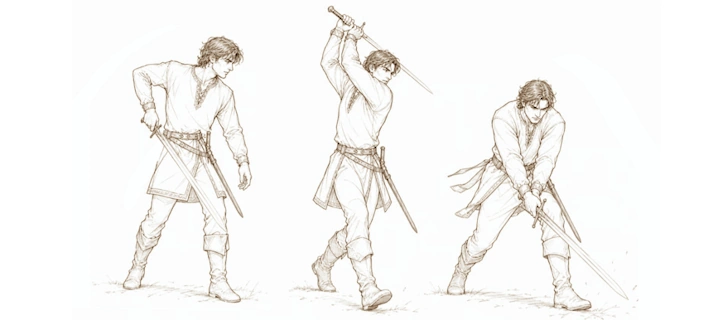
Believable characters are not ordinary. They are coherent. Readers will accept cloned diplomats, immortal mages, or sentient ships if the character's motives make sense, their limits matter, and their choices reveal a consistent inner life. Worldbuilding creates rules. Pressure forces someone to live with them. When pressure rises, personality becomes visible.
Believable characters move the story because their actions arise from understandable motives rather than author convenience. Events unfold through decisions that feel inevitable rather than contrived. The following five traits show how character and plot advance together.
Characters move when they want something badly enough to act. The goal can be noble, selfish, confused, or evolving—but it must be active. Desire translates worldbuilding into stakes. It tells the reader what the character is willing to risk. In speculative fiction, desire often collides with the rules of the world. A scholar seeks forbidden knowledge in a theocracy. A mechanic wants independence in a corporate city-state. A healer tries to stop a plague caused by magic's ecological damage. Desire exposes the character's unfiltered priorities.
Desire is what the character wants. Need is what they require in order to grow. Need operates beneath the surface—often the opposite of what the character consciously pursues. A soldier wants victory; he needs to grieve. A ruler wants control; she needs to learn trust. The gap between desire and need is where character arcs are born. When a character achieves their desire without fulfilling their need, the story feels hollow. When the story forces the two into collision, growth becomes inevitable.
A flaw is not a weakness invented to make a character seem humble. It is a genuine internal failure that produces real costs. Some characters resist using power even when it corrupts. A pilot depends on neural enhancements that slowly erode judgment. A noble inherits prejudice embedded in an empire's caste logic. The severity of consequences depends on the flaw, the character, and the moment in the story. A flaw becomes story the moment it costs the character something. Pressure exposes that cost.
Competence earns the reader's respect. Constraint creates drama. Competence alone solves problems too easily—constraint blocks simple solutions and forces difficult choices. A brilliant hacker can expose corruption, but doing so will deport their partner. A legendary swordsman refuses to defend food stores because an oath forbids violence against citizens. Ability becomes interesting only when it meets limitation. Drama appears when competence meets constraint and a decision becomes unavoidable.
History matters when it influences what the character believes is possible, what they fear, and what they refuse to do again. Speculative fiction tempts writers to explain everything—entire histories sit behind every empire, magic system, and alien culture. Resist that impulse. Backstory slows the story unless it sharpens the decision happening now. A former soldier's refusal to give an order does not require a scene explaining the battle that broke them. It requires only the weight of that refusal in the moment it is made.
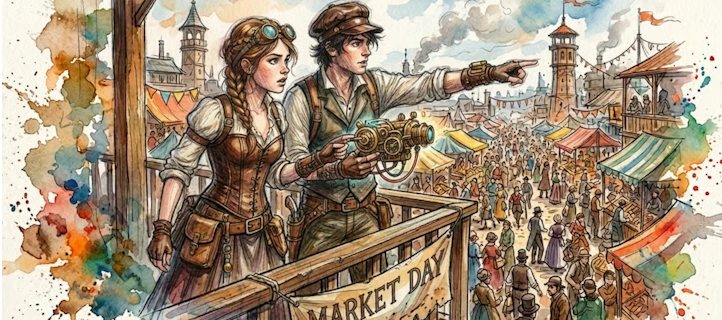
Exposition isn't the enemy; frictionless exposition is. Readers accept information when it arrives through action, conflict, and consequence. They resist it when it feels detached from the moment of the story. Character solves this problem naturally. Characters notice what affects them, interpret events through their own biases, and respond with behavior. When world details appear through those reactions, the reader absorbs them without feeling lectured.
One effective technique is the worldbuilding tell embedded in routine. Show a character performing a small, necessary act that implies a larger system. A traveler scans for curses before entering a marketplace. A parent checks the radiation seal on a child's lunch container. A sailor tips a shrine-keeper for weather luck before leaving port. A wizard offers blood to register a spell.
These are not lore dumps; they are lived habits that signal what the world demands. None of these actions require explanation. By watching the character perform them, the reader learns what the world demands.
Another technique is value conflict. Put two characters in the same setting but with different stakes, and let their disagreement reveal the world's competing systems. An aristocrat and a peasant standing on the same bridge during a flood will interpret the water's arrival—its cause, its blame, its solution—entirely differently. Neither character needs to explain the world. Their conflict does it for them.
The same city becomes a different city depending on who walks through it. When you choose a viewpoint character, you are also choosing which version of the world the reader will see. Choose characters whose position in the world creates friction—because friction is where the world becomes visible.
In speculative fiction, character is not separate from worldbuilding and plot. Character is the bridge that turns invention into lived experience. If you build characters who want something urgently, fear something specific, and must navigate the rules of your world to pursue it, the story begins to generate its own momentum. The setting stops being a backdrop and becomes a proving ground.
Chapter Exercises: Applying Pressure
Exercise 1 — World Rule Meets Personal Vulnerability
Choose one rule of your world and one personal vulnerability in your character. Force them into conflict. Write the scene in which the character cannot avoid the collision.
Science Fiction example: Cybernetic upgrades are mandatory for public service—but the character fears losing their identity.
Fantasy example: Magic requires a binding soul-oath—but the character refuses to trust institutions.
Exercise 2 — Desire vs. Need
Write one sentence for each major character in your current project: what do they want, and what do they actually need? If both answers are the same, your character may not have an arc yet.
Exercise 3 — The Worldbuilding Tell
Write a single paragraph in which your character performs a routine action that reveals one rule of your world—without stating the rule directly. No narrator explanation. Let the behavior carry all the information.
Reflection
Believable characters emerge when desire, flaws, and constraints collide with the rules of the world. Pressure forces choices. Choices reveal character. In speculative fiction, this process does more than build personality—it transforms worldbuilding into lived experience.
Story moves through a simple, unbreakable chain:
- Worldbuilding creates rules.
- Rules create stakes.
- Stakes create pressure.
- Pressure forces choices.
- Choices reveal character.
This chain turns speculative worlds into lived experience. When characters must live with the consequences of those choices, the impossible becomes believable.
Believable characters do not decorate the plot. They generate it.
As you continue through this book, you will develop characters with sharper motivations, clearer strengths and weaknesses, and more dynamic arcs—while maintaining this foundation: character is the engine of speculative fiction.
Chapter 1 Complete
Your progress has been saved.
workspace_premium Unlock All 8 Chapters — Upgrade to Elite